
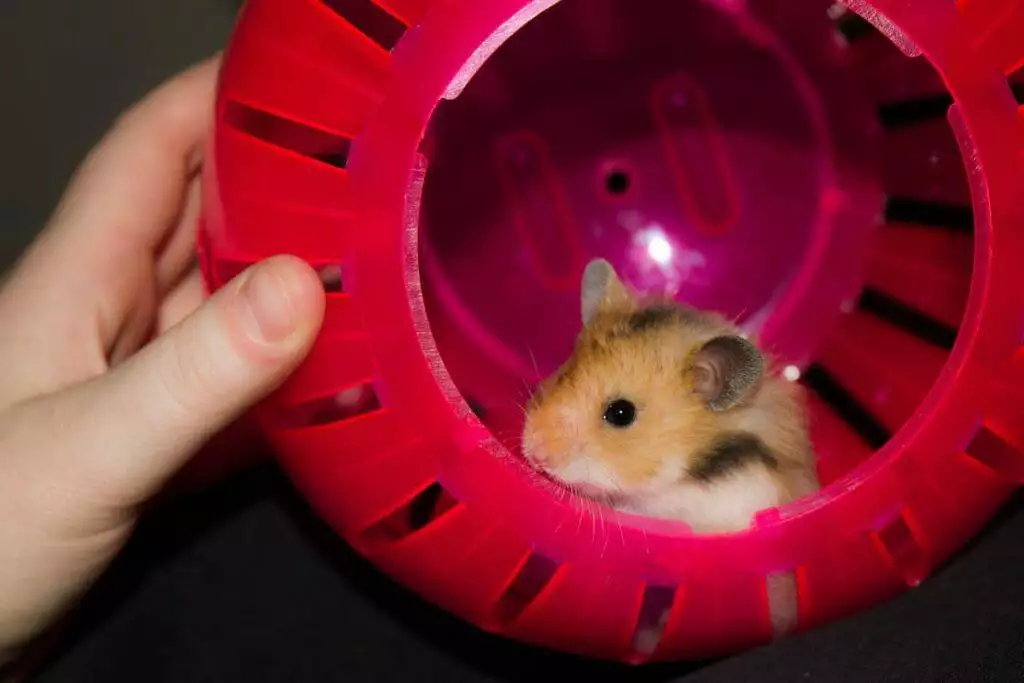
Hamster balls (also called exercise balls or run-about balls) were once considered a fun way to let hamsters explore outside their cage. But in recent years, vets, the RSPCA, and hamster welfare organisations have spoken out strongly against them. Here’s why hamster balls are dangerous and what to use instead.
Why Hamster Balls Are Not Safe
| Risk | Explanation | Severity |
|---|---|---|
| Stress & sensory deprivation | Hamsters rely on smell and touch — both are blocked inside a ball | High |
| No control over movement | Cannot stop, rest, eat, drink, or hide | High |
| Trapped limbs | Toes and nails catch in ventilation slits | Serious injury |
| Collision injuries | Rolling into furniture, down stairs, off surfaces | Serious / fatal |
| Overheating | Poor ventilation causes rapid heat build-up | High |
| Spinal damage | Small balls force an arched running posture | Serious |
| Unhygienic | Hamster runs through own urine and faeces | Moderate |
What the RSPCA Says
The RSPCA explicitly advises against hamster balls, stating that they restrict natural behaviours, cause significant stress, and pose physical dangers including trapped limbs and overheating. They recommend playpens or hamster-proofed rooms as safe alternatives for out-of-cage exercise.
The Problems in Detail
1. Sensory Deprivation = Extreme Stress
Hamsters have poor eyesight and navigate primarily through smell, whiskers, and touch. Inside a plastic ball, all three senses are severely restricted. The hamster cannot feel the ground, cannot detect obstacles by smell, and their whiskers are pressed against plastic. This sensory deprivation creates extreme anxiety — the hamster isn’t “enjoying a run,” it’s desperately trying to escape.
2. No Way to Stop
Unlike a wheel (where the hamster can step off at any time), a ball provides no choice. The hamster cannot stop to rest, drink water, eat, or retreat to a safe hiding spot. For a prey animal, being unable to hide is deeply stressful. Many hamsters urinate and defecate inside the ball out of fear — then continue running through their own waste.
3. Physical Injury Risks
The ventilation slits in hamster balls are the most common cause of injury. Tiny toes and nails get caught, leading to:
- Broken toes and feet
- Ripped-out nails
- Dislocated limbs
Additionally, hamsters in balls frequently roll into furniture, down stairs, or off tables — resulting in internal injuries or death. The small size of most commercial balls (too small for adult Syrian hamsters) forces an arched running posture that can cause long-term spinal damage.
4. Overheating and Poor Ventilation
Despite the ventilation holes, airflow inside a sealed plastic sphere is minimal. During exercise, hamsters generate significant body heat — with nowhere for it to dissipate, the ball becomes a heat trap. Overheating can cause heatstroke, which is potentially fatal in hamsters. The enclosed space also traps ammonia from urine, irritating the respiratory system.
5 Safe Alternatives to Hamster Balls
1. Hamster Playpen — Best Overall Alternative
A playpen gives your hamster supervised freedom to explore without any of the dangers of a ball. The hamster can use all their senses, choose where to go, stop and rest whenever they want, and explore enrichment items you place inside. The Omlet Large Hamster Playpen (161.5 × 84 × 26cm) is a popular UK choice — chew-proof, foldable, and spacious. Other options include wire or fabric panel playpens from £15-30.
2. Bathtub Exploration
Line a dry bathtub with towels, add some hides, tubes, and treats — instant safe exploration zone. The smooth sides prevent escape, and you can sit beside the tub to supervise. Free and effective.
3. Hamster-Proofed Room
Block off a small room (bathroom works well), seal any gaps, remove cables and hazards, and let your hamster explore at floor level. Always supervise — hamsters are expert escape artists and can squeeze through surprisingly small spaces.
4. Exercise Wheel (In-Cage)
A proper exercise wheel inside the cage is the safest and most important exercise equipment for any hamster. Key requirements:
- Solid surface — Never wire or mesh (causes bumblefoot)
- Minimum 21cm diameter for dwarf hamsters
- Minimum 28-30cm diameter for Syrian hamsters
- The hamster’s back should be straight while running — if it curves, the wheel is too small
5. Enrichment in a Large Cage
The best exercise is a sufficiently large cage with deep burrowing substrate, multiple hides, tunnels, and foraging opportunities. A hamster in a well-enriched, appropriately sized cage (minimum 100×50cm for Syrians, 80×50cm for dwarfs) will self-exercise naturally through burrowing, climbing, and exploring.
FAQs
But my hamster seems to enjoy the ball?
What looks like enjoyment is actually panic-driven running. Hamsters are prey animals — their instinct when trapped in an unfamiliar, uncontrollable environment is to run. The frantic movement isn’t excitement; it’s a stress response. The fact that a hamster runs in a ball doesn’t mean they’re having fun — it means they’re trying to find a way out.
Are there any safe hamster balls?
No. The fundamental problems with hamster balls — sensory deprivation, lack of control, poor ventilation, and injury risk — are inherent to the design. No amount of ventilation holes or size adjustments fixes these issues. Every major animal welfare organisation advises against all hamster balls.
What about supervised hamster ball time?
Even supervised, the risks remain. Supervision can prevent falls down stairs but cannot address the stress, sensory deprivation, overheating, or trapped-limb risks. If you’re going to supervise your hamster anyway, a playpen provides the same out-of-cage experience with none of the dangers.