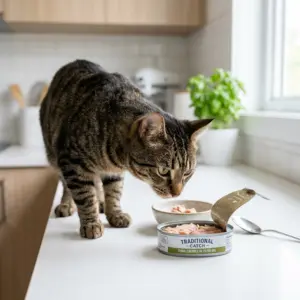
⚠️ Quick Answer: MOST cats should avoid cheese.
While not toxic, most adult cats are lactose intolerant. Cheese causes digestive upset, is high in fat and salt, and offers no nutritional value cats can’t get from proper cat food.
- Key Facts
- Cheese Types Compared for Cats
- Why Most Cats Are Lactose Intolerant
- Can Cheese Be Used to Give Medicine?
- What About Kittens?
- Better Treat Alternatives
- Frequently Asked Questions
- •Can cats eat cheese?
- •Is cream cheese safe for cats?
- •Can kittens eat cheese?
- •Why do cats love cheese if it’s bad for them?
- More Food Safety Guides
- • 📚 Related Reading
Key Facts
| Question | Answer |
|---|---|
| Toxic? | ✅ No — but causes digestive problems |
| Why problems? | Most adult cats lack lactase enzyme |
| Safe amount | Pea-sized piece, rarely |
| Best alternative? | Cooked chicken, commercial cat treats |
| Kittens? | ❌ Avoid — use kitten milk replacer only |
Cheese Types Compared for Cats
| Cheese Type | Lactose | Fat | Salt | Safe? |
|---|---|---|---|---|
| Cheddar (hard) | Lower | High | High | ⚠️ Tiny amount rarely |
| Parmesan | Very low | High | Very high | ⚠️ Tiny amount rarely |
| Cottage cheese | Moderate | Low | Low | ⚠️ Better option if any |
| Cream cheese | High | Very high | Moderate | ❌ Avoid — pancreatitis risk |
| Brie / Camembert | High | Very high | Moderate | ❌ Avoid |
| Blue cheese | Moderate | High | Very high | ❌ Avoid — mould can be toxic |
| Processed cheese slices | Moderate | High | Very high | ❌ Avoid — additives |
Why Most Cats Are Lactose Intolerant
Kittens produce lactase to digest their mother’s milk. After weaning (4–8 weeks), lactase production drops significantly. This means most adult cats cannot properly break down lactose, leading to:
- Diarrhoea (most common)
- Vomiting and nausea
- Bloating and gas
- Abdominal discomfort
Despite the popular image of cats with a saucer of milk, dairy is not a natural or healthy part of a cat’s diet.
Can Cheese Be Used to Give Medicine?
Many owners wrap pills in cheese — this can work in a pinch but isn’t ideal. Better alternatives include:
- ✅ Pill pockets (commercial cat treats designed for medication)
- ✅ Small piece of cooked chicken wrapped around the pill
- ✅ Pill crushers mixed into wet food (check with vet first)
What About Kittens?
Kittens should never be given cheese or cow’s milk. Their nutritional needs are very specific:
- ❌ Cow’s milk — wrong protein/fat balance, causes diarrhoea
- ❌ Cheese — high fat and salt, no nutritional benefit
- ✅ Mother’s milk — ideal for first 4–8 weeks
- ✅ Kitten milk replacer — for orphaned kittens only
Better Treat Alternatives
- ✅ Cooked chicken — plain, shredded, no seasoning
- ✅ Cooked fish — plain salmon or white fish (small amounts)
- ✅ Commercial cat treats — formulated for feline nutrition
- ✅ Freeze-dried meat treats — single-ingredient, high protein
Frequently Asked Questions
Can cats eat cheese?
Technically yes, but most shouldn’t. Most adult cats are lactose intolerant. A pea-sized piece of hard cheese (like cheddar) very occasionally is unlikely to cause harm, but it’s not recommended.
Is cream cheese safe for cats?
No — cream cheese is high in both lactose and fat. It can cause severe digestive upset and increases the risk of pancreatitis.
Can kittens eat cheese?
No. Kittens should only drink their mother’s milk or veterinary-formulated kitten milk replacer. Cheese offers no benefit and is harmful to kittens.
Why do cats love cheese if it’s bad for them?
Cats are attracted to the fat and protein content in cheese, not the lactose. But just because they enjoy it doesn’t mean it’s safe — cats can’t judge what’s good for them.
⚕️ Medical Disclaimer: This article is for informational purposes only. Consult your vet about your cat’s specific dietary needs.